
Playing the Pokémon TCG
How to play the Pokémon Trading Card Game: the basic rules made simple
Updated on 15/10/2026
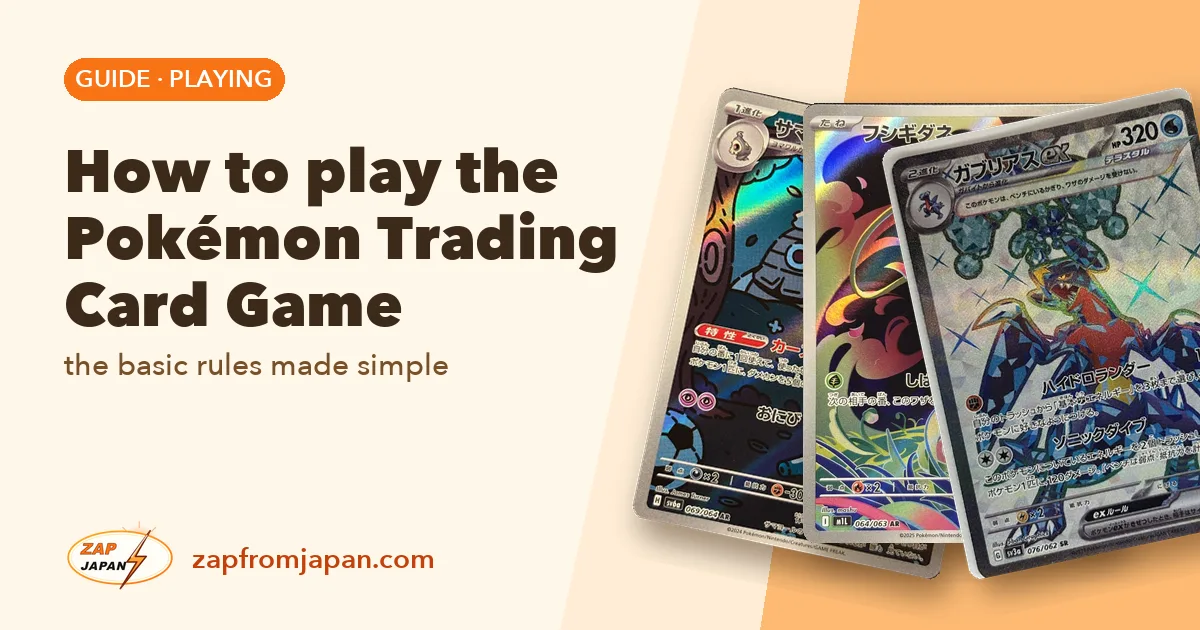
The Pokémon Trading Card Game (TCG) looks complicated until you play your first game: then it becomes second nature. This guide covers everything you need to get started, with photos of our own cards so you know where to look.
How to read a card
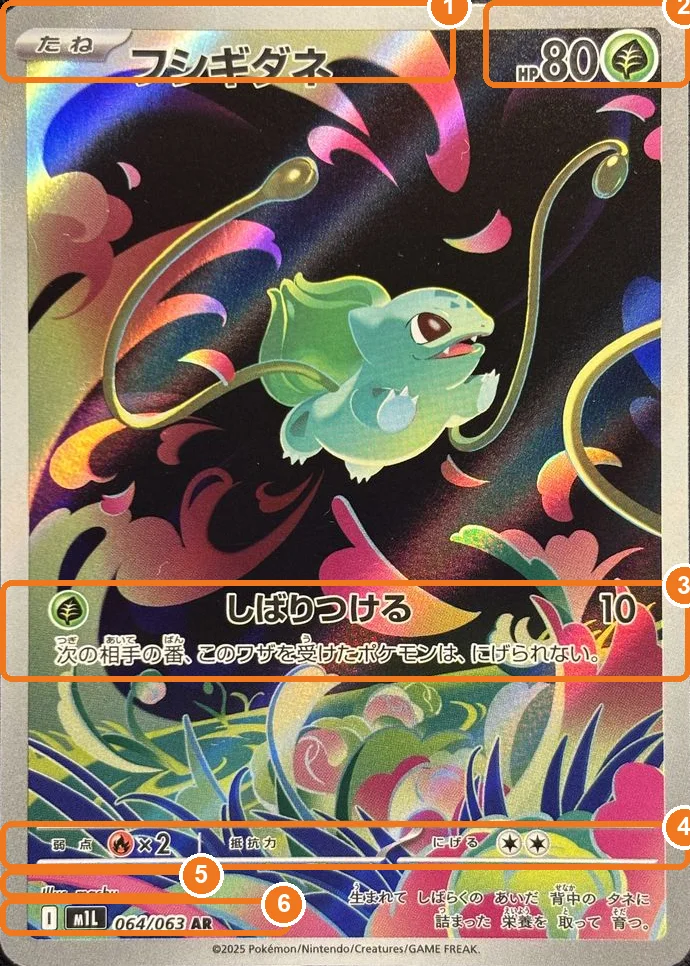
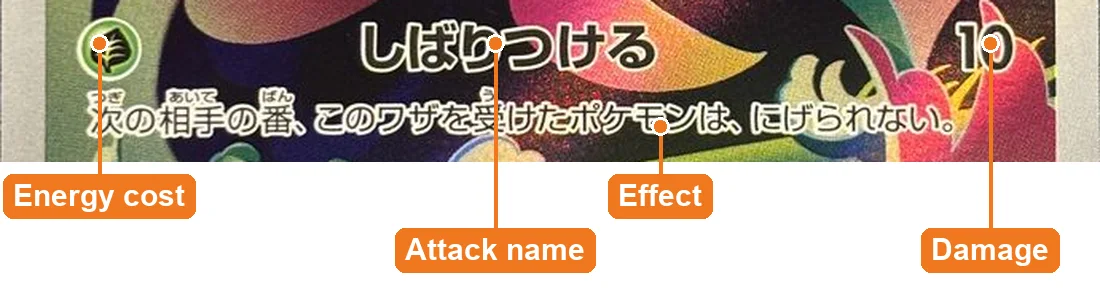
The play area
Each player has one Active Pokémon, the only one that attacks and gets attacked, and up to 5 Pokémon on the Bench, ready to take over. Next to them sit the deck, the discard pile and the 6 Prize cards, face down.
How to win
You win the game when one of these three things happens:
- you take all 6 of your Prize cards: you take one each time you Knock Out an opposing Pokémon, two or more if it's a Pokémon ex, V or Mega;
- your opponent has no Pokémon left in play;
- at the start of their turn your opponent has to draw but their deck is empty.
Setup
- Shuffle your deck and draw 7 cards.
- If you don't have a single Basic Pokémon in hand, reveal it, shuffle and draw again: that's a mulligan. For each of your mulligans your opponent may draw one extra card.
- Place a Basic Pokémon face down as your Active Pokémon and up to 5 Basic Pokémon on your Bench.
- Set aside the top 6 cards of your deck, face down: those are your Prizes.
- Flip your Pokémon face up and start.
A turn, step by step
| Phase | What you do |
|---|---|
| 1. Draw | Draw a card from your deck. |
| 2. Actions | In any order: put Basic Pokémon on your Bench, evolve, attach ONE Energy card, play Items (as many as you like), ONE Supporter and ONE Stadium, use Abilities, retreat your Active Pokémon (once per turn). |
| 3. Attack | Your Active Pokémon attacks. After the attack your turn ends. |
Evolution
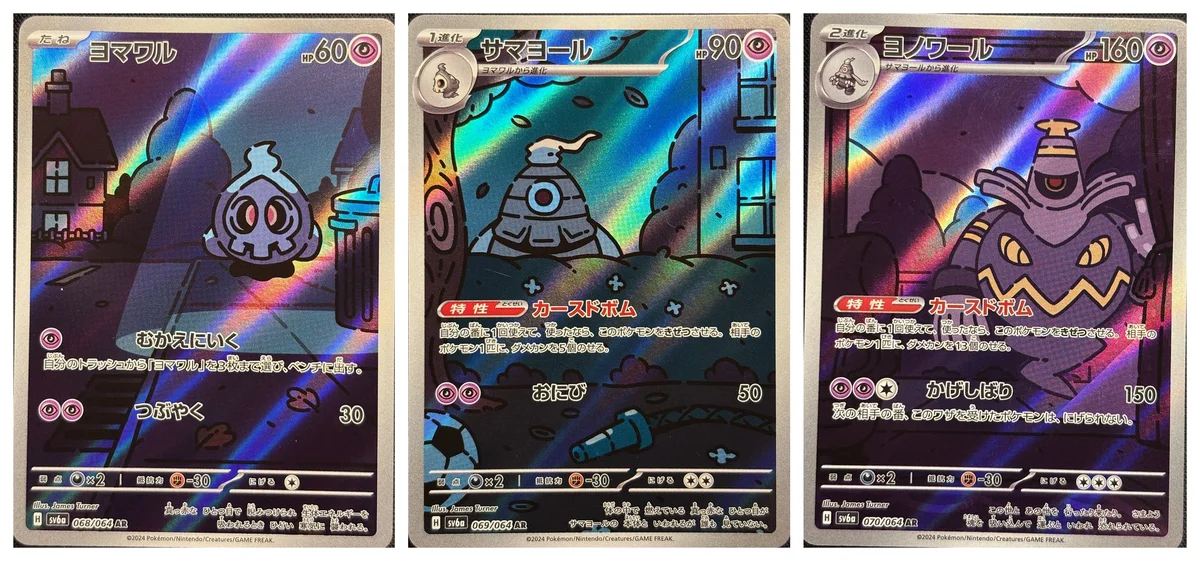
A Basic Pokémon evolves when you put its Stage 1 on top of it, and a Stage 1 with its Stage 2. You can't evolve a Pokémon on the turn you put it into play. Some of our cards tell an evolution as a story across several cards:
Energy, Weakness and Retreat
To attack, the Active Pokémon needs the Energy shown in the attack cost (the Colorless symbol can be paid with any Energy). If the attacker is the type shown as the defender's Weakness, damage is doubled; if it's the type of its Resistance, 30 damage is subtracted. To retreat your Active Pokémon to the Bench you discard as many Energy as its Retreat Cost.

What next?
Play a few games, then move on to the guide on how to build a deck and the one on types and Weakness.
Frequently asked questions
How many cards do you need to play?+
Can you play with Japanese cards?+
Who goes first?+
How many Energy cards can I attach per turn?+
More guides
 How to build a Pokémon deck: rules, ratios and tips
 Pokémon ex and Mega ex cards: what they are and how they work (plus V, VMAX, GX)
 Pokémon Standard format and the 2026 rotation: which cards are legal👁 5 readers
 Pokémon types in the card game: Weakness and Resistance👁 1 reader
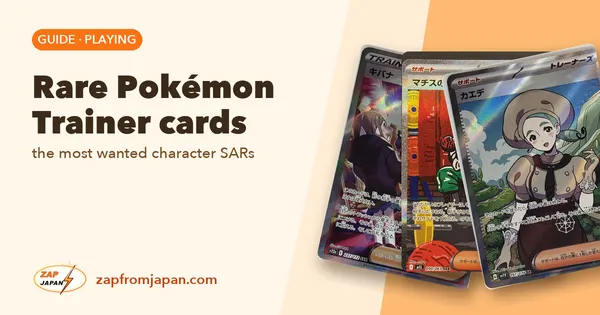 Rare Pokémon Trainer cards: the most wanted character SARs
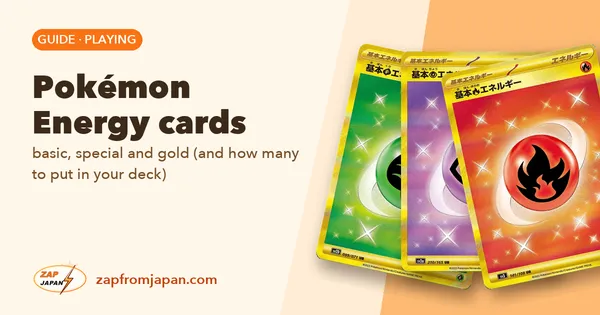 Pokémon Energy cards: basic, special and gold (and how many to put in your deck)