
Collecting
Grading Pokémon cards: what it is and how it works (PSA, BGS, CGC)
Updated on 15/10/2026
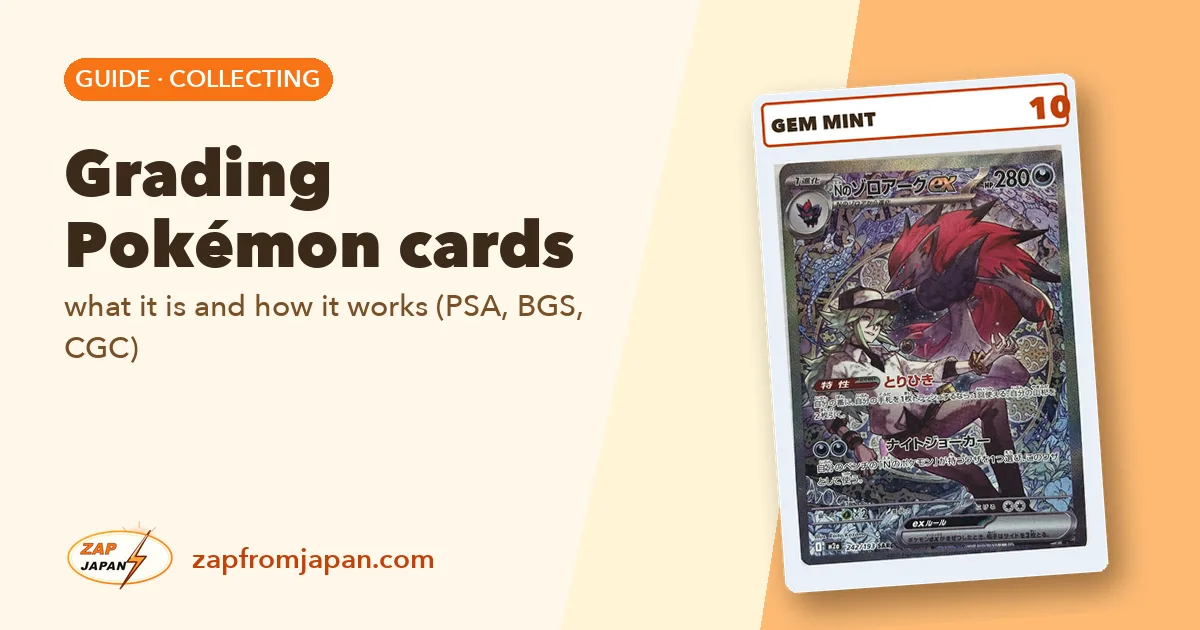
What grading is
You send the card to a specialist company (the best known are PSA, BGS-Beckett and CGC), which assesses its condition, gives it a grade and seals it in a case, the slab, with a label and a certificate number you can check online.
The grade scale
What they look at
| Aspect | What they check | Typical defect |
|---|---|---|
| Centring | Equal borders on all four sides | Artwork shifted to one side |
| Corners | Sharp, full corners | White specks, rounded corners |
| Edges | Smooth edges | Chipping, white marks on the back |
| Surface | No marks | Scratches, fingerprints, print lines |
When it's worth it
Grading costs money and takes time, so it's mainly worth it for valuable cards in excellent condition: SARs, gold cards, ARs of the most popular Pokémon. For a card worth a few euros the cost usually outweighs the gain.
SARs from our catalogue

Pikachu ex
126/103

Salamence ex
133/103

Hisuian Zoroark VSTAR
234/172

Deoxys VSTAR
223/172
From Europe
You can send directly to the company or use shops and services that collect submissions. Costs, turnaround and insurance vary a lot: compare the terms before choosing. And prepare the card as explained in how to store your cards.
Frequently asked questions
What does PSA 10 mean?+
How long does it take?+
Is it worth grading Japanese cards?+
More guides
 How to start a Pokémon card collection: what to buy and where to begin👁 1 reader
 Fake Japanese Pokémon cards: how to spot them (with photos)👁 3 readers
 How much is a Pokémon card worth? How to work out its value (Japanese too)
 The most expensive and rarest Pokémon cards ever (many are Japanese)👁 7 readers
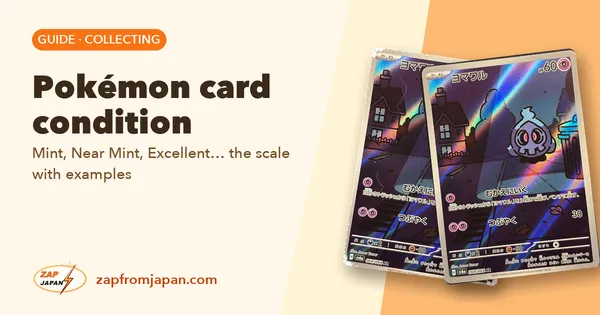 Pokémon card condition: Mint, Near Mint, Excellent… the scale with examples
 Charizard Pokémon cards: the rarest, the most beautiful and what they're worth