
Collecting
Pokémon card condition: Mint, Near Mint, Excellent… the scale with examples
Updated on 15/10/2026
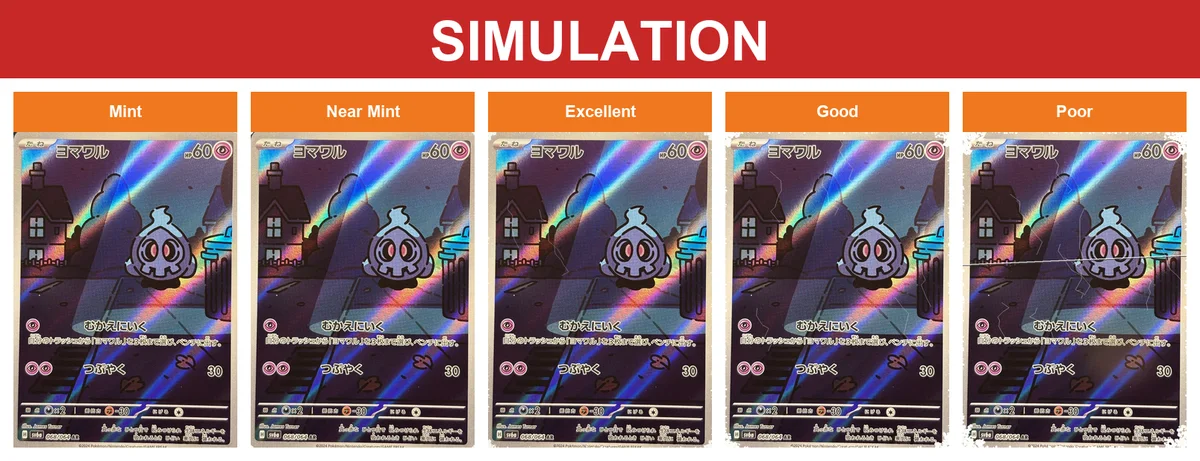
The condition scale
| Condition | Code | What the card looks like |
|---|---|---|
| Mint | M | Perfect, no flaws even up close |
| Near Mint | NM | Like new: at most a speck or a minimal mark |
| Excellent | EX | A few light marks on corners or edges, clean surface |
| Good | GD | Visible wear on corners and edges, some scratches |
| Light Played | LP | Used: marked edges, scratches, no creases |
| Played | PL | Heavily used, possible light creases |
| Poor | PO | Damaged: creases, tears, stains, writing |
1. Corners
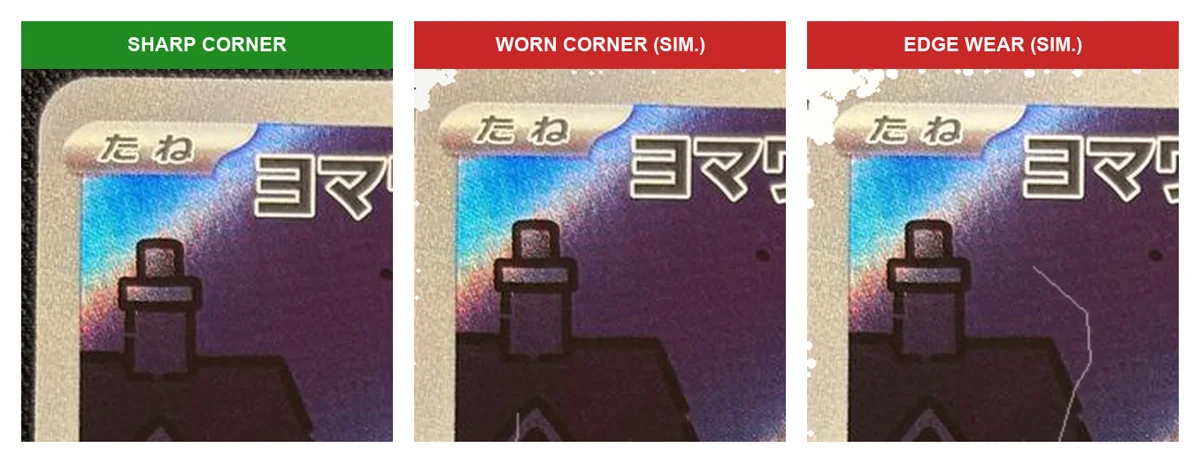
They're the first thing to check. A perfect corner is sharp and full of colour; a worn corner has white specks or is slightly rounded. Look closely, on the back as well.
2. Edges (and the back)
The blue edges of the back show every little knock as white specks: it's by far the most common flaw, even on cards fresh from the pack. On the front of Japanese cards the borders are often silver or light, so marks show less: that's why the back tells you much more.
3. The surface
Tilt the card under a lamp: scratches, fingerprints and print lines only appear in raking light. On holo and textured cards (AR, SR, SAR) scratches show more.
4. Centring
Look at the margins: on a well-centred card they're equal left and right, top and bottom. It isn't damage, but it matters a lot for grading and for the most demanding collectors. Japanese cards are known for careful centring.
How much the value changes
A lot: a Near Mint card can be worth double or more than the same card in Good condition. That's why it pays to protect cards straight away: read how to store your cards.
Cards in stock now
Chandelure
069/067
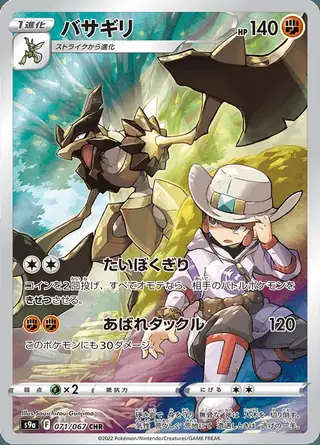
Kleavor
071/067
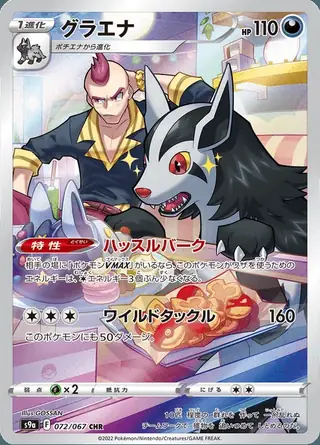
Mightyena
072/067
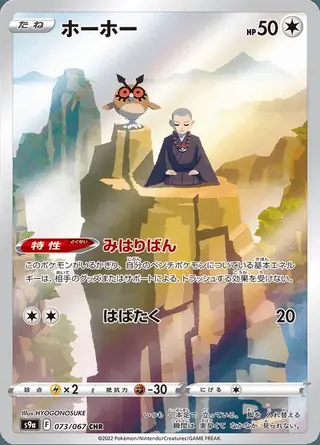
Hoothoot
073/067
Frequently asked questions
What does Near Mint mean?+
What's the difference between Mint and Near Mint?+
Are shop conditions and PSA grades the same?+
What condition are your cards in?+
More guides
 How to start a Pokémon card collection: what to buy and where to begin👁 1 reader
 Fake Japanese Pokémon cards: how to spot them (with photos)👁 3 readers
 How much is a Pokémon card worth? How to work out its value (Japanese too)
 The most expensive and rarest Pokémon cards ever (many are Japanese)👁 7 readers
 Charizard Pokémon cards: the rarest, the most beautiful and what they're worth
 Pikachu Pokémon cards: the rarest, the most beautiful and what they're worth