
Collecting
Fake Japanese Pokémon cards: how to spot them (with photos)
Updated on 15/10/2026👁 3 readers
1. The text

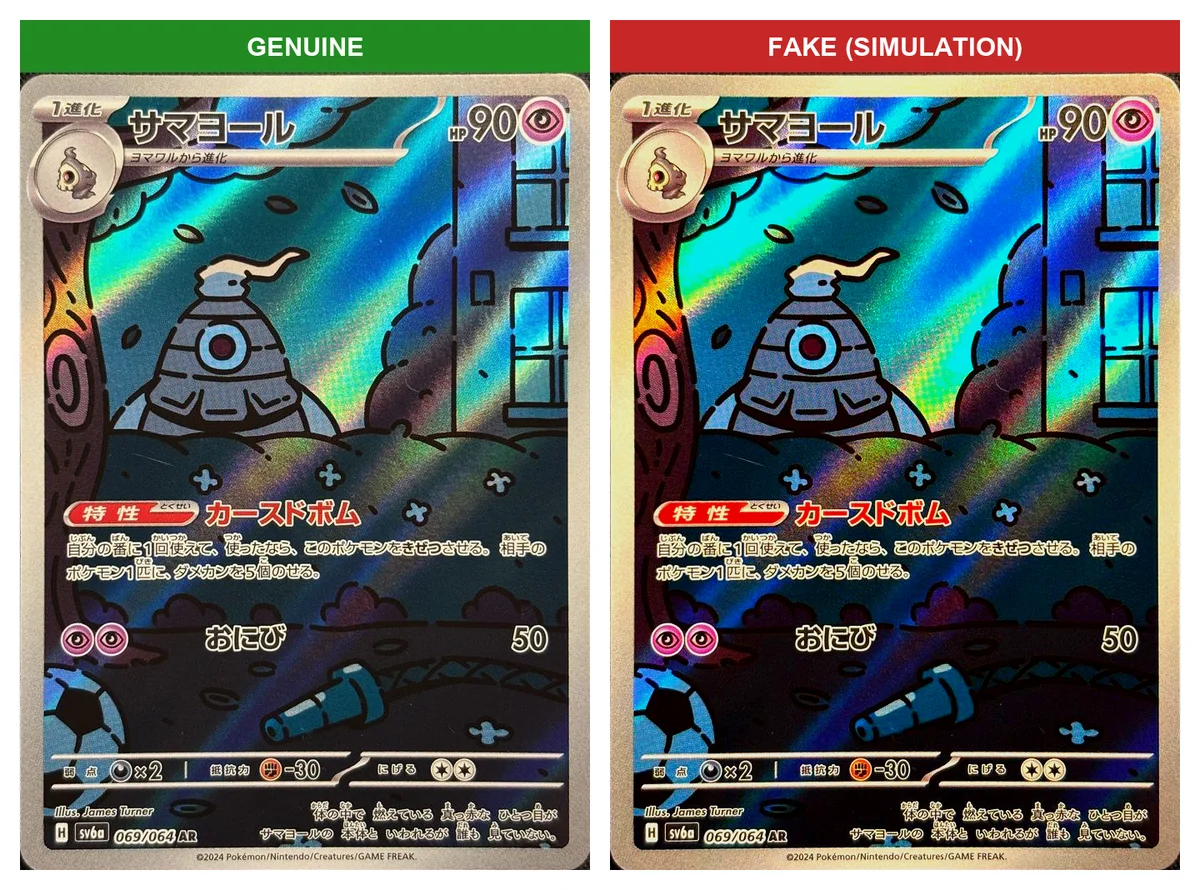
Fakes often have blurry characters, odd spacing or wrong characters. Compare the card with an official image or with its page in our shop: name, attacks and text must be identical, down to their position.
2. The colours
3. Surface and holo
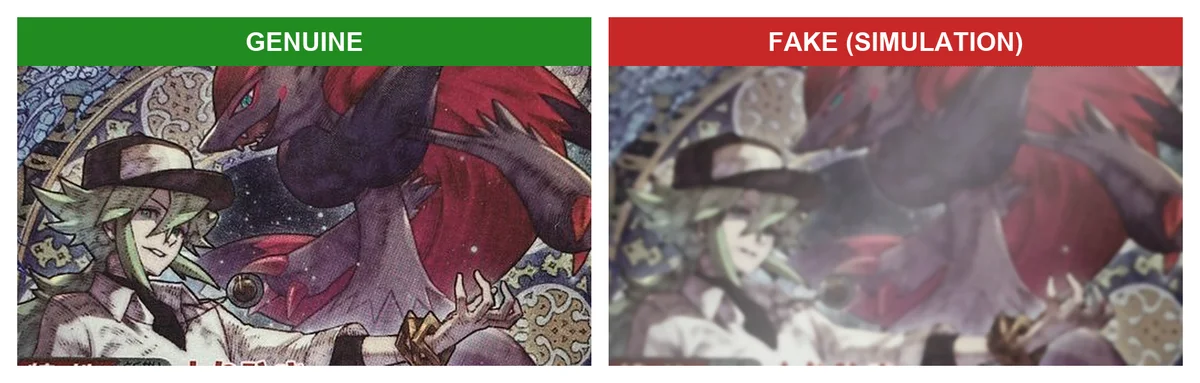
Modern AR, SR and SAR cards have a worked surface: on SRs and SARs you can feel the raised texture with your finger, and the holo effect follows the details of the artwork. A smooth, evenly glossy card where there should be texture deserves suspicion.
4. Number, rarity and font

Number, rarity and set code must match a card that actually exists and always use the same font. You can check them in the card list of each expansion: if the number doesn't exist or the rarity doesn't match, the card isn't genuine. For the abbreviations read the guide to rarities.
5. The back
6. Edge and thickness
7. Price and seller
A sought-after SAR sold for a fraction of its value is almost always a problem. Buy from sellers who show the real card (not photos taken from the web), answer questions and accept returns. Every card we sell is a genuine Japanese card, photographed, checked by hand and returnable within 14 days: details on the returns page.
Frequently asked questions
Does the light test work?+
Is the rip test reliable?+
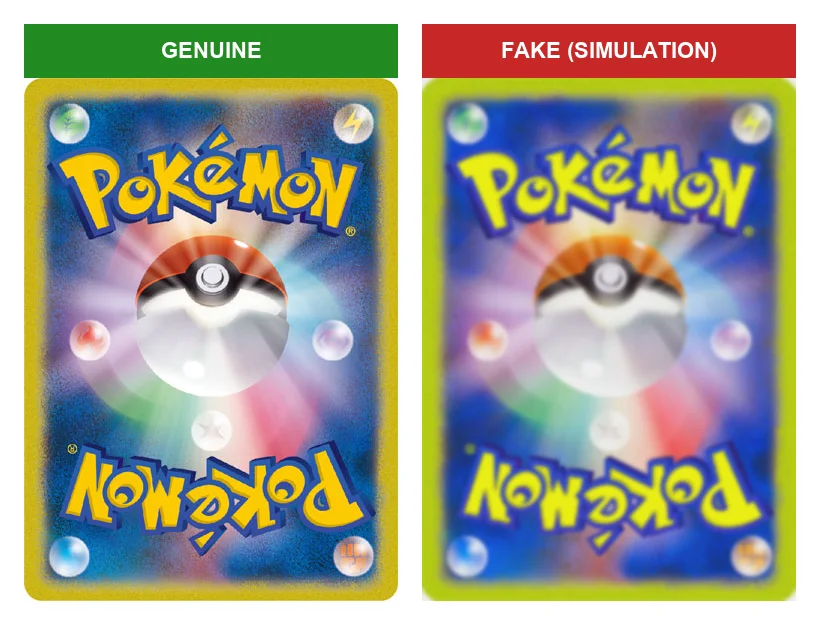
Do Japanese cards have a different back?+
More guides
 How to start a Pokémon card collection: what to buy and where to begin👁 1 reader
 How much is a Pokémon card worth? How to work out its value (Japanese too)
 The most expensive and rarest Pokémon cards ever (many are Japanese)👁 7 readers
 Pokémon card condition: Mint, Near Mint, Excellent… the scale with examples
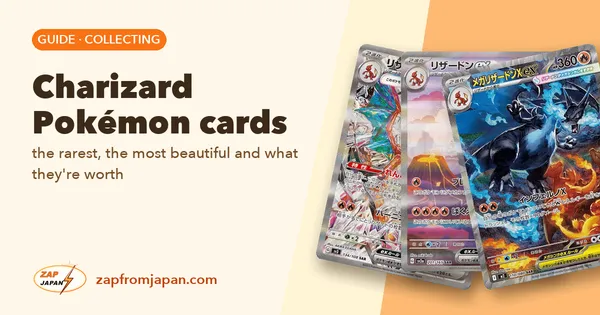 Charizard Pokémon cards: the rarest, the most beautiful and what they're worth
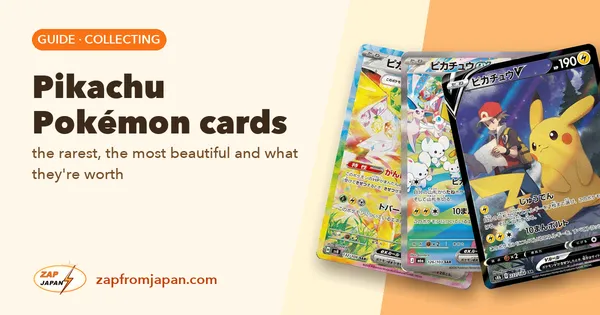 Pikachu Pokémon cards: the rarest, the most beautiful and what they're worth